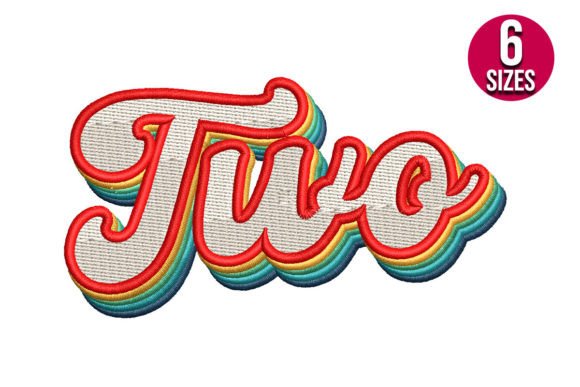
Two Retro: A Vintage Birthday Design That Feels Like a Handpicked Find
First Impressions: Warm, Witty, and Instantly Recognizable
Opening Two Retro for the first time, I didn’t see just another birthday embroidery file—I saw a mood. It’s got that effortless mid-century charm: clean curves, balanced negative space, and typography that nods to diner menus and vintage postcards without tipping into cliché. The “Two” feels intentional—not just numeric, but celebratory; the “Retro” isn’t loud or kitschy—it’s subtle, confident, and quietly nostalgic. As a designer who evaluates hundreds of embroidery files a year, what stands out is how Two Retro avoids visual clutter while still carrying personality. It doesn’t scream for attention—it invites it. That makes it ideal for projects where handmade authenticity matters more than flash: think baby onesies with soft cotton thread, linen tea towels for a boutique kitchen line, or minimalist tote bags sold at craft fairs.
A Real-World Test: Stitching It on a Linen-Cotton Tote Bag
Last week, I prepped Two Retro for a small-batch order—12 custom tote bags for a local bakery’s “Two Years Strong” anniversary gift set. I chose natural linen-cotton blend fabric, medium-weight tear-away stabilizer, and matte polyester thread in warm charcoal and cream. The result? Crisp satin stitch outlines held beautifully, fill stitches laid flat without puffing, and the overall scale felt generous but not overwhelming at 4.2" wide. Customers commented on how “thoughtful” and “uniquely personal” the design felt—even though it’s a digital embroidery file. That’s the quiet strength of Two Retro: it reads as intentional, not templated. It doesn’t need extra embellishment, which saves time and cost when scaling production for a craft business or Etsy seller.
Where It Shines (and Where It Asks for Care)
Two Retro works exceptionally well on:
- Custom apparel—especially sweatshirts and structured t-shirts where its balanced weight anchors nicely on the chest or sleeve
- Tote bag design—its horizontal orientation and open spacing prevent distortion on seams and gussets
- Pillow covers and aprons—the design breathes on textured surfaces without getting lost in weave or drape
- Baby embroidery—gentle curves and no fine serifs make it legible and soothing on onesies and burp cloths
- Holiday embroidery and personalized gifts—it pairs naturally with neutral palettes and complements handwritten tags or minimalist packaging
But—and this is where experience matters—Two Retro needs thoughtful placement on:
- Curved surfaces like caps or beanies: The horizontal flow can stretch or compress if hooped too tightly; test on scrap first and consider slight digitizing tweaks for crown placement
- Thin or highly stretchy fabric: Without proper cut-away stabilizer underneath, the satin stitch edges may ripple—especially around the rounded terminals of the “R” and “o”
- Dark fabric: While it looks elegant in monochrome mockups, low-contrast thread choices (e.g., light grey on navy) risk losing definition in the inner curves—stick to high-contrast pairings unless aiming for subtlety
- Small hoop sizes under 4x4": This isn’t a micro-design. If your machine or project constraints demand tight framing, confirm the file’s minimum recommended hoop size before committing to a client timeline
What It Adds to Your Finished Product—Beyond Stitch Count
Using Two Retro isn’t just about executing a machine embroidery design—it’s about reinforcing trust. When customers see clean, well-balanced stitching on a handmade product, they subconsciously associate it with care, consistency, and brand integrity. For an Etsy seller listing personalized gifts, that perception directly affects conversion and repeat orders. For a small shop owner branding staff aprons or café towels, Two Retro delivers recognizable yet understated identity—no logo needed, just quiet confidence in the craft. And because it’s rooted in vintage birthday styling without leaning on cartoonish tropes, it crosses age and aesthetic lines: equally fitting for a toddler’s milestone onesie and a 50th birthday sweatshirt.
Practical Designer Notes Before You Stitch
Before adding Two Retro to your next embroidery project—or listing it as part of your digital design assets—take these five minutes:
- Test on scrap fabric matching your final substrate, using your usual stabilizer and thread combo
- Check thread color contrast in both natural and artificial light—what reads clearly on screen may fade on dark denim or heather grey
- Review stitch density visually in your embroidery software: dense fills near curved letterforms should flow, not pile up
- Confirm hoop size compatibility—don’t assume it fits your smallest hoop without verifying dimensions
- Inspect small details in zoomed view: are inner corners sharp? Do overlapping elements (like the crossbar in “R”) stitch cleanly without nesting or skipped jumps?
Also, always test Two Retro in black-and-white printable mockups before finalizing listings or client proofs. And if you’re selling finished items commercially—or offering the embroidery file itself—double-check licensing terms. The description says it’s usable across t-shirts, pillows, bags, hats, and gifts, but verify whether commercial redistribution or resale of the digital embroidery file is permitted.
Final Thought: A Design That Ages Well
In a market flooded with overdesigned, trend-chasing embroidery files, Two Retro stands out by doing less—and doing it well. It doesn’t chase virality; it builds quiet recognition. It won’t dominate a busy garment, but it will earn a second glance on a well-made tote, a thoughtful baby gift, or a boutique apron. For designers, craft business owners, and makers who value longevity over novelty, Two Retro isn’t just another birthday embroidery option—it’s a reliable, human-scaled design asset worth keeping in rotation season after season.