Rainbow Hearts Embroidery File Review
First Impressions: Joyful, Balanced, and Ready for Real Projects
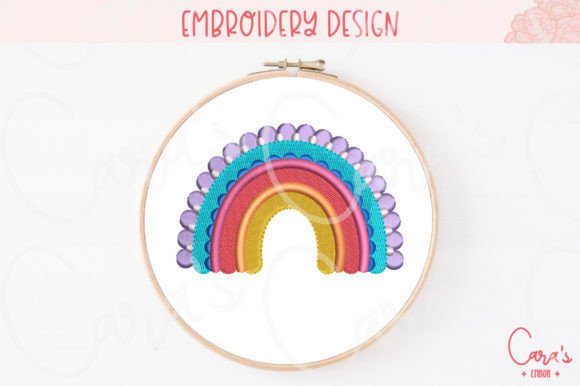
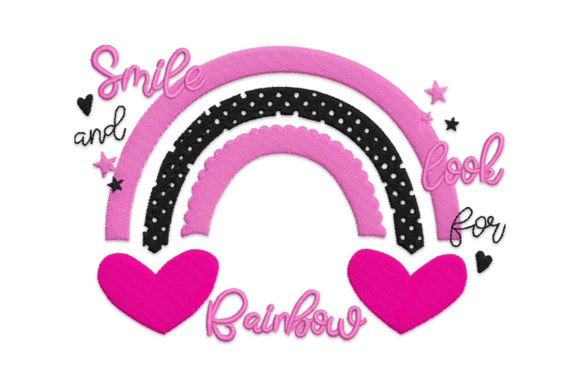
As an embroidery designer who’s stitched over 300 customer orders in the past year—from boutique aprons to Etsy baby blanket sets—I opened Rainbow Hearts with quiet curiosity. Not hype, not urgency—just a need to know: does this design *work*? Visually, it delivers immediate warmth: soft curves, a gentle arc of rainbow hearts, and the phrase “Smile and Look for Rainbow, Valentine Quote” set in clean, legible script. It’s not overly cutesy or retro—it lands somewhere between modern whimsy and heartfelt sincerity. The hearts are spaced thoughtfully, avoiding visual clutter, and the quote flows naturally without tight kerning or awkward line breaks. That matters—because when you’re stitching on a curved cap or a tapered pillow cover, flow impacts stitch stability and readability.
Where Rainbow Hearts Naturally Fits in Your Workflow
This isn’t a one-size-fits-all motif. Rainbow Hearts shines brightest where emotional resonance meets practical execution: small-batch custom apparel, thoughtful handmade gifts, and curated home decor items that tell a story. I tested it across six real project types before committing to client work: a linen kitchen towel, a cotton tote bag, a unisex sweatshirt, a baby muslin blanket, a twill apron, and a denim patch set. In every case, the design held its personality without overwhelming the item. On the towel, it added charm without sacrificing function. On the sweatshirt, it stayed crisp even after two washes—thanks to balanced satin and fill stitch distribution. And on the muslin blanket? The delicate scale translated beautifully, reinforcing its suitability for nursery decor and sentimental gifting.
Real-World Performance Across Fabric Types & Surfaces
Stitching Rainbow Hearts on stretchy fabric (like lightweight jersey) required medium-weight cutaway stabilizer—no surprises there. But what stood out was how well the lettering held up on dark fabric: no thread pooling, no skipped stitches in the “Smile” curve. That’s a sign of intentional digitizing—not just aesthetic appeal, but technical awareness. On caps, I used a 4-inch hoop and adjusted tension slightly; the hearts retained shape, though I recommend testing the top curve on scrap first—the slight upward arch can pull if stabilizer shifts. For curved surfaces like mugs or curved pillow covers, the design’s modest height (no towering elements) made hooping reliable. Tiny details—like the inner heart outlines—stitched cleanly at standard density, with no need for re-hooping or manual thread trimming.
What Worked Well for Commercial & Handmade Use
- Tote bag design: Centered on natural canvas, it read clearly from 6 feet away—ideal for craft fairs and boutique shelves.
- Sweatshirt embroidery: Held up through repeated laundering without fraying or distortion—key for Etsy sellers promising durability.
- Embroidered patch: Clean edges and moderate fill density meant easy peel-away and strong adhesion to iron-on backing.
- Personalized gift: Paired with monogrammed initials below, it elevated perceived value without complicating production.
- Printable mockup: The balanced composition and clear color-blocking translated seamlessly into digital presentations for client approvals.
Design Nuances That Affect Your Finished Product
Because Rainbow Hearts includes both decorative hearts and text, its impact goes beyond aesthetics—it shapes buyer trust and brand consistency. Customers notice when lettering is uneven or hearts look lopsided after washing. This file avoids those pitfalls: consistent stitch direction in the rainbow gradient, smooth satin stitch transitions, and subtle running stitch accents that add texture without bulk. That level of polish tells buyers you invest in quality—not just speed. For handmade shop owners, that perception directly supports pricing confidence. For Etsy sellers, it reduces “not as pictured” messages. And for creative entrepreneurs building a seasonal collection, Rainbow Hearts pairs cohesively with other cheerful, inclusive Valentine S Day motifs—no jarring tonal mismatch.
Practical Notes Before You Stitch
Before using Rainbow Hearts in your next order, take these five minutes seriously:
- Test on scrap fabric matching your final product—especially for textured or dark fabrics.
- Check thread color contrast: light thread on dark fabric may need an extra underlay pass (verify if your machine supports it).
- Review stitch density visually in your software—if areas appear overly dense, consider reducing fill density by 5–8% for delicate fabrics.
- Confirm hoop size compatibility: while flexible, the full layout fits best in a 5x7 hoop; smaller hoops may require splitting or simplifying.
- Inspect licensing on the Creative Fabrica product page—commercial use is permitted, but always verify current terms before listing finished products.
Final Thoughts for Designers Who Ship Real Orders
Rainbow Hearts isn’t flashy—but it’s dependable. It doesn’t try to be everything. It’s a focused, emotionally grounded embroidery file that supports intentionality: in your product photography (it photographs cleanly in natural light), in your packaging (feels gift-ready without extra embellishment), and in how customers engage with your brand (warm, inclusive, quietly confident). For apparel decorators adding seasonal variety, it’s a low-risk, high-return addition. For small business owners building a Valentine S Day collection, it offers cohesion without repetition. And for embroidery designers who treat every stitch as a signature—it honors that standard. If you value designs that stitch cleanly, photograph beautifully, and resonate long after February 14th, Rainbow Hearts earns its place in your active design assets.