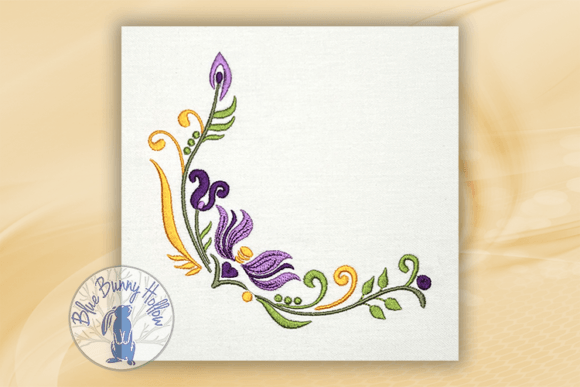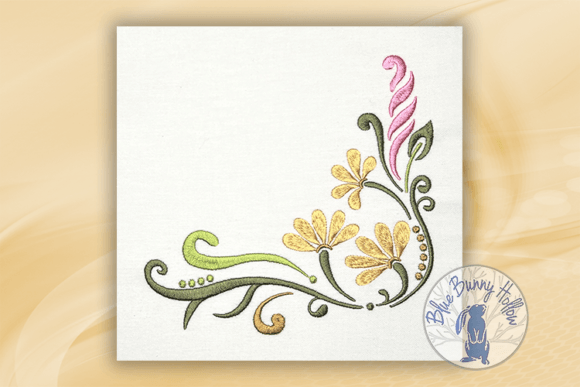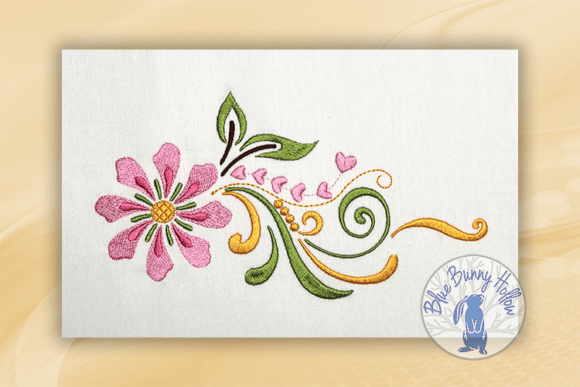
Floral Corners 1
A Designer’s First Glance: Delicate, Repeatable, and Quietly Premium
As an embroidery designer who’s prepped over 200 craft fair booths—and shipped thousands of handmade products—I opened Floral Corners 1 expecting charm. What I found was something more intentional: a soft, botanical elegance that leans into quiet confidence rather than loud novelty. It doesn’t shout “festive” or “modern”—it breathes “farmhouse-meets-fine-craft.” The title alone—Floral Corners—signals restraint and purpose. This isn’t a full-bloom bouquet; it’s a single, thoughtful flourish designed to anchor a corner, frame a border, or elevate an edge. That makes it instantly versatile for the handmade market—especially for sellers who value subtlety over saturation.
Where Floral Corners 1 Shines on Craft Fair Products
In my booth setup—tote bags stacked beside aprons, tea towels draped over wooden crates, patches pinned to a fabric board—Floral Corners 1 stands out where others fade: on small-scale, high-touch items. Here’s how it performs across real-world products:
- Tote bag design: Embroidered in the lower corner (not centered), it adds artisanal weight without overwhelming the canvas. Customers notice it mid-reach—not as decoration, but as proof of care.
- Apron embroidery: Perfect at the hip pocket edge or cuff corner. Gives functional wear a bespoke feel—ideal for foodie markets and boutique cafés.
- Tea towel embroidery: Works beautifully on linen or cotton terry. The floral motif reads clearly even when folded—critical for gift-ready presentation.
- Embroidered patch: Clean lines and open negative space make it ideal for iron-on or sew-on patches. Holds up through laundering and repeated handling.
- Fabric pouch & pillow cover: When repeated symmetrically (e.g., one corner on each side), it creates rhythm without repetition fatigue—a subtle signature for your brand.
- Craft fair booth samples: Mounted on corkboard with natural twine, Floral Corners 1 reads well from 6 feet away—unlike dense florals that blur at distance.
What Makes It Sell—Beyond Aesthetics
This isn’t just about prettiness. As an Etsy seller and wholesale embroidery partner, I evaluate designs by three practical filters: clarity at glance, repeatability in batch, and conversion in context. Floral Corners 1 passes all three.
It’s instantly legible—even on a phone screen in an Etsy listing. No tiny stems or micro-petals that vanish in thumbnail view. Its composition invites repetition (for quilts, framed samplers, or coordinated sets) without demanding perfect alignment. And because it’s rooted in the Single Flowers category, it avoids trend fatigue: no seasonal gimmicks, no dated fonts, no forced whimsy. It feels like a design asset you’ll use for years—not one you’ll retire after spring.
Careful-Use Notes Every Embroiderer Should Know
Don’t assume this design is “easy” just because it’s delicate. Here’s where attention matters:
- Dense stitch areas: Check for tight petal clusters—if present, they may pucker on textured towels or thick denim. Always test on your target fabric first.
- Fabric texture: On terry cloth or looped linen, reduce top thread tension slightly and use cutaway + tear-away stabilizer combo.
- Curved surfaces: Caps and curved pouches demand precise hooping. If the original Floral Corners 1 file includes tight curves near edges, consider simplifying outer contours for clean cap embroidery.
- Dark fabric: Confirm thread colors are rich enough to contrast—soft pastels may disappear on navy or charcoal unless paired with white underlay.
- Small sizes: At under 2.5 inches wide, fine stamen or leaf veins may lose definition. Stick to 3"–4.5" for optimal clarity on patches and pouches.
Design Strengths That Build Your Brand
When customers pause at your booth, they’re not just buying a tea towel—they’re buying intention. Floral Corners 1 reinforces that intention. Its balanced negative space gives handmade quality breathing room. Its repeat-friendly structure supports cohesive branding—think matching market bags, napkin sets, and gift tags, all anchored by the same corner motif. It elevates perceived value without raising price points. And unlike busy motifs that compete with product function, Floral Corners 1 enhances utility: a corner-embroidered apron still wipes cleanly; a stitched tote still folds neatly.
Essential Designer Checks Before You Cut Fabric
Before committing to 50 tea towels or uploading to your digital shop:
- Test Floral Corners 1 on scrap fabric matching your production stock—same weave, same weight, same dye lot.
- Check thread contrast under natural light *and* booth lighting—some ecru threads glow on ivory linen but disappear on oatmeal.
- Review spacing: Does the design clear seam allowances, pocket openings, or curved hems?
- Confirm hoop size compatibility—especially if stitching on sleeves, caps, or narrow straps.
- Inspect stitch density: High-density fills may require heavier stabilizer on lightweight cottons.
- Use the right stabilizer: Medium-weight cutaway for stable fabrics; fusible + tear-away for knits or slubs.
- Create at least one real mockup—not just a printable mockup—to assess drape, texture interaction, and true-to-life scale.
- Compare fabric colors side-by-side: Ivory thread on cream fabric reads warmer than on off-white—small shifts impact premium perception.
- Verify commercial licensing: If selling finished products (not just the embroidery file), ensure your license permits physical resale—many digital embroidery files restrict commercial embroidery use without add-on permissions.
Final Thought: A Cornerstone, Not Just a Corner
Floral Corners 1 is more than a machine embroidery design—it’s a strategic tool for creative entrepreneurs. It fits seamlessly into the handmade product ecosystem: scalable for Etsy sellers, distinctive for boutique makers, and production-smart for small-shop owners juggling craft fairs and online orders. In a market flooded with maximalist prints and overdesigned logos, its quiet precision becomes its loudest selling point. Stitch it once, thoughtfully—and let it speak for your craftsmanship every time a customer runs their fingers over that embroidered corner.